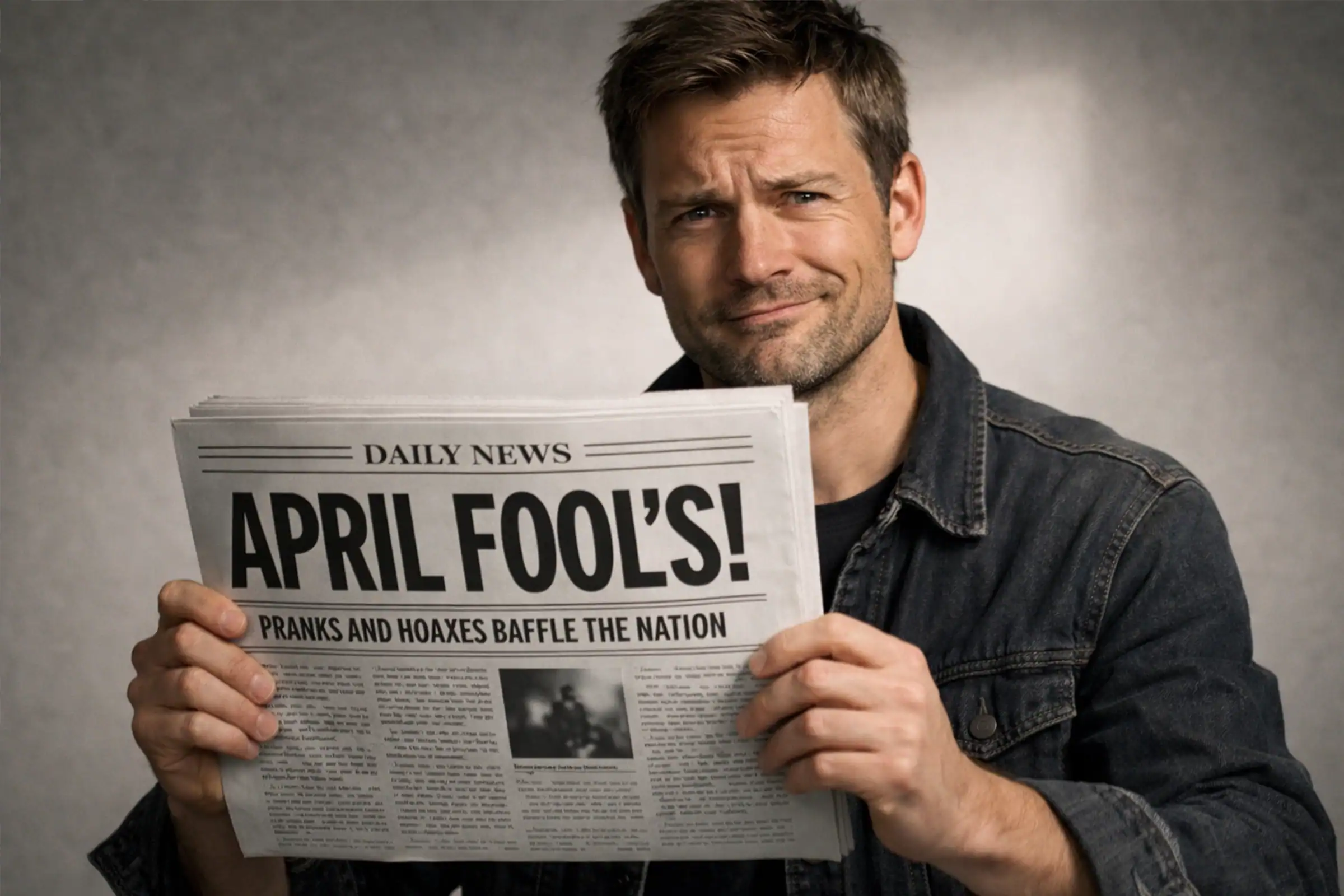
On April Fool’s Day each year, brands can gleefully ditch their traditional marketing strategies and embrace humour, creativity and the unexpected. What began as a harmless annual prank has evolved into a global marketing opportunity. From fast food chains to film studios, companies leverage April Fool’s Day to catch the attention of consumers and occasionally create spectacular viral moments.
Why brands participate in April Fool’s Day
April 1st is a once-a-year opportunity for brands, as audiences have come to expect humorous content on that day. This novelty factor allows companies to experiment with crazy product ideas or even fake announcements. The upshot is that unlike ‘standard’ advertising, which consumers are more likely to ignore, April Fool’s Day campaigns spark curiosity and interaction. PRWeek reports that 90% of consumers remember a funny ad, and 72% are more likely to view the brand positively afterward. That’s why many marketers see April 1 as an opportunity to drive awareness in a crowded market.
One of the main reasons brands participate is to generate awareness around the brand, which then creates media coverage. When an April Fool’s Day campaign is successful, it will often go viral on social media, with users sharing the campaign and speculating whether it’s real or fake. Organic sharing is important as it creates widespread exposure and also free publicity – what brand doesn’t love that!
April Fool’s Day is also a way for organisations to humanise or even laugh at themselves, with research showing that consumers are more likely to engage with brands that feels more personal and use humour to connect.

Source: statsignificant.com
What makes an effective campaign
There are several elements that are needed to create an effective April Fool’s Day campaign. It needs to be believable; it needs to be funny; and it needs to be highly shareable – the most successful campaigns all invite participation, spark conversation and encourage debate.
The initial believability of the campaign is important because it sucks people in, creates the “Whaaat” moment. If a campaign simply isn’t believable, it will fall flat. That uncertainty is key to the campaign; it makes us splutter over our morning coffee and immediately share the content, even as the penny is dropping that it’s all just a joke. When done right, believability turns a simple prank into a widely shared cultural moment.
A successful April Fool’s Day campaign should also link back to a product or service; something that’s relevant to what the brand believes in. When Dyson launched its Airbrow tool in 2025, they teased a new beauty tool that was supposedly designed to use airflow to style the brows (like a mini version of their hair tools). It was described as a “high tech brow styler” that could sculpt and smooth brows with precision. It carefully maintained the brand’s core concept of hair styling tools. The concept was humorous and absurd but it really looked the part. This familiarity builds trust, even in a moment built on deception, because consumers recognise the tone and intention. A strong brand connection ensures the campaign doesn’t just go viral for a day but reinforces how people see and remember the brand long after the joke is over.
The shareability of the campaign is a major factor in how successful it will be. If a brand is risking an April Fool’s Day campaign, they will want it to have an organic reach and they will want the word to spread. Reposting and resharing the campaign will mean that it will be highly successful and make the brand more of a household name.
Is there a risk in April Fool’s Day marketing?
Simple answer: yes! Any approach that’s founded on humour or gently misleading people carries a risk. There’s a chance that people won’t get the joke and will end up feeling confused or even annoyed. Worse, the ad or social post could come across as too real, duping people and undermining their trust in the brand.
The bottom line is that humour doesn’t land the same way with everyone. There can be blurred lines when it comes to creating an April Fool’s Day campaign, so being careful around the humour of the campaign is very important. Push the envelope by all means – but take care not to offend.

About the author
Chloe Moore is an intern with Cullen Communications, interested in specialising in digital media, social media and copywriting.